Spinal injuries Sustained in Accidents
At Advantage Solicitors we have helped many clients and their families; Have access to immediate rehabilitation and support, Obtain immediate interim payments to help financial burden, Secure substantial compensation in settlement.
- 0208 807 1676
Spinal Injuries
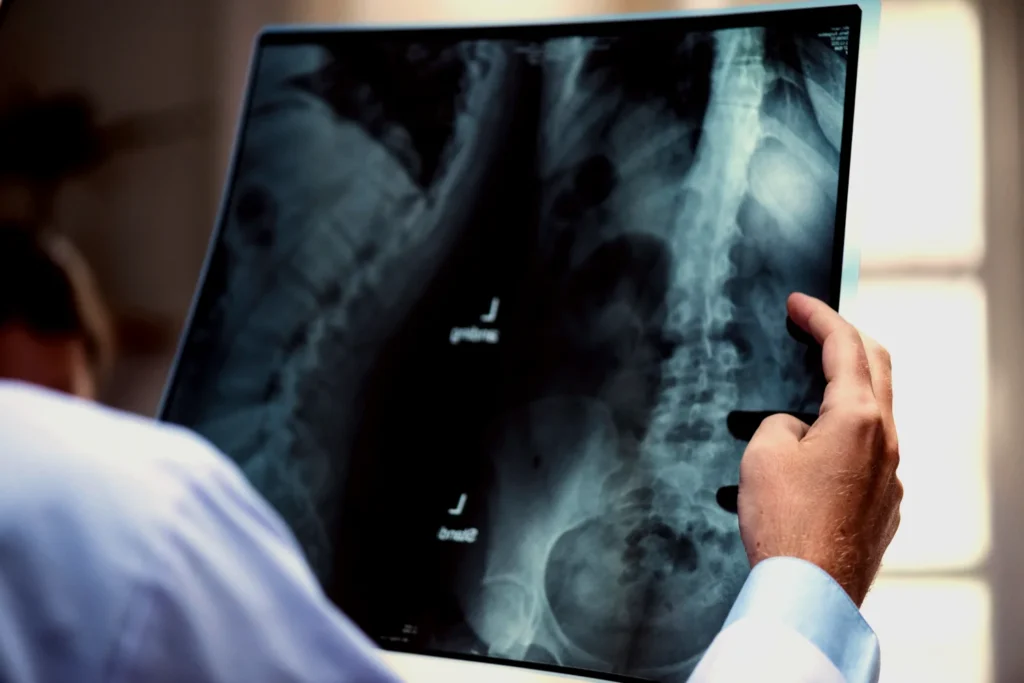
Spinal injuries are some of the most serious and life-changing injuries a person can sustain in an accident. Whether caused by road traffic collisions, workplace accidents, falls, or sporting injuries, damage to the spinal cord can result in long-term disability, loss of mobility, and chronic pain.
Types of spinal injuries
Classification of a spinal injury is based on the severity and location of the injury. The spinal cord is responsible for transmitting signals between the brain and body, meaning any damage can have a substantial impact.
- Incomplete Spinal Cord Injury – The spinal cord is partially damaged, meaning the individual may retain some movement or sensation below the injury site. Recovery is possible with rehabilitation, but outcomes vary.
- Complete Spinal Cord Injury – The spinal cord is fully severed, leading to total loss of movement and sensation below the affected area. This type of injury often results in permanent paralysis.
Spinal Injuries based on location
The impact of a spinal cord injury depends on where it occurs:
- Cervical Spine (Neck – C1 to C7)
- The most severe type of spinal injury, potentially causing tetraplegia (quadriplegia) – paralysis of all four limbs and loss of bodily function control.
- Can affect breathing, requiring ventilator support.
- Thoracic Spine (Upper Back – T1 to T12)
- Damage in this area may cause paraplegia, meaning loss of movement in the legs while arms remain functional.
- May affect bladder and bowel control, as well as torso stability.
- Lumbar Spine (Lower Back – L1 to L5)
- Often results in partial or full paraplegia, affecting leg movement but leaving upper body strength intact.
- Can impact bladder, bowel, and sexual function.
- Sacral Spine (Pelvic Area – S1 to S5)
- Less common but can lead to mobility issues, loss of bladder/bowel control, and sexual dysfunction.
Cervical spine
What is the cervical spinal cord?
The cervical spine sits at the top of the spinal column, linking the skull to the upper body. It consists of seven vertebrae, labelled C1 through C7, located in the neck. This critical region supports the head, provides extensive mobility, and safeguards the spinal cord.
What do cervical spinal nerves control?
Cervical spinal nerves play a vital role in controlling sensory and motor functions across the upper body, influencing movement, sensation, and critical bodily processes. Each cervical nerve corresponds to specific regions and functions:
- C1-C3 nerves: Control head and neck movement, enabling basic functions like turning, tilting, and nodding the head. They are also essential for stabilizing the head’s position.
- C4 nerves: Assist with breathing by controlling the diaphragm and contribute to shoulder movement, enabling shrugging and basic arm positioning.
- C5 nerves: Influence muscles in the shoulders and upper arms, allowing for shoulder rotation, lifting the arms, and initiating elbow flexion.
- C6 nerves: Critical for wrist extension, allowing for controlled hand positioning and some forearm movement.
- C7 nerves: Enable elbow extension and some finger movements, playing a role in grasping, releasing, and fine motor skills.
What are the symptoms of a cervical spinal cord injury?
Due to its proximity to the brain and its control over a large portion of the body, injuries to the cervical spinal cord are often the most severe, frequently leading to tetraplegia, also known as quadriplegia. Common symptoms of cervical spinal cord injury include:
- Loss of sensation or feeling in the arms, hands, chest, or legs, depending on the level of injury
- Paralysis in varying degrees, such as tetraplegia (quadriplegia), which affects the arms, legs, and torso. In severe cases, full paralysis may occur
- Difficulty breathing or breathing problems if the injury affects the diaphragm or chest muscles, potentially requiring mechanical ventilation
- Loss of voluntary control over bladder and bowel functions, with possible incontinence
- Pain or a burning sensation in the neck, shoulders, or arms
- Impaired motor function that may affect fine motor skills, such as grasping objects or moving fingers and hands
- Spasticity or muscle stiffness, often resulting in involuntary muscle contractions.
Thoracic spine
What is the thoracic spinal cord?
The thoracic spinal cord, located in the upper and middle back, plays a vital role in maintaining stability and supporting essential body functions. It connects the cervical spine (neck) and lumbar spine (lower back) and is made up of 12 vertebrae numbered T1 to T12. Each vertebra corresponds to specific spinal nerves responsible for posture, balance, and breathing by relaying signals to the chest, back, and abdominal muscles.
What do thoracic spinal nerves control?
The thoracic spinal nerves play a critical role in transmitting signals between the spinal cord and specific areas of the body. Each nerve section corresponds to a distinct area and function:
- T1 nerves: Provides motor and sensory function to the hands and fingers. It contributes to fine motor skills, dexterity, and coordination, essential for tasks like gripping, writing, and manipulating small objects.
- T2-T5 nerves: Affect the muscles of the upper chest. They help stabilize the rib cage, support breathing, and assist in movements like lifting or pushing. Proper function in this region is vital for maintaining respiratory health and upper body strength.
- T6-T8 nerves: Influence the chest and upper abdominal muscles. They play a role in deeper breathing by engaging the diaphragm and upper abdominal muscles, contributing to core stability and balance. This section also helps with posture and protects the spine during movement.
- T9-T12 nerves: Control the lower abdominal muscles, which are key to maintaining posture, protecting internal organs, and aiding in movements such as bending, twisting, and coughing. Proper abdominal muscle function is essential for core strength, which supports activities like standing, sitting, and physical exertion.
What are the symptoms of a thoracic spinal cord injury?
Damage to the thoracic spinal cord typically results in paraplegia and can disrupt nerve function, leading to:
- Significant weakness or loss of sensation in the legs
- Loss of feeling in the genitals or rectal region
- Difficulty controlling bowel or bladder function
- Pain radiating from the back to the arms, legs, or around the rib cage toward the chest
- Fever and lower back pain, often linked to underlying inflammation or infection
- Symptoms following a fall, injury, or other trauma
Lumbar spine
What is the lumbar spinal cord?
The lumbar spine, located between the thoracic and sacral spine, is the lower portion of the spinal cord and consists of five large, strong vertebrae labeled L1 to L5. These vertebrae are built to carry the body’s weight and support essential activities like walking, running, and lifting. As a critical section of the spine, the lumbar spinal cord connects the central nervous system to the lower body, playing a vital role in mobility, balance, and sensation in the hips, legs, and feet. Due to its weight-bearing functions, injuries to this area can significantly impact daily activities and overall movement.
What do lumbar spinal nerves control?
The five pairs of lumbar spinal nerves branch out from the L1 to L5 vertebrae, transmitting signals between the spinal cord and specific muscles in the lower body. Each nerve has a distinct function:
- L1 and L2 nerves: Control hip bending and flexing, critical for walking and sitting.
- L3 nerves: Enables knee straightening, important for standing and maintaining stability.
- L4 nerves: Allows the foot to bend upward (dorsiflexion), aiding in balance and movement.
- L5 nerves: Supports toe extension, necessary for precise movements like walking on uneven surfaces.
What are the symptoms of a lumbar spinal cord injury?
Injuries to the lumbar spinal cord can cause a range of symptoms, depending on the severity and location of the damage. Common symptoms include:
- Loss of function in the hips and legs, which may vary from weakness to complete immobility
- Little or no voluntary control of bowel and bladder function, although these can often be managed with specialized equipment
- Difficulty walking, requiring assistive devices like braces or wheelchairs for mobility
- Altered sensation or numbness in the lower body, affecting balance and coordination
Sacral spine
What is the sacral spinal cord?
The sacral spine, or sacrum, is located beneath the lumbar spine and above the coccyx (tailbone). It consists of five fused bones, forming a triangular structure at the base of the spine. These bones, numbered S1 to S5, correspond to nerves that control key functions and sensations in the lower body and pelvic region.
What do sacral spinal nerves control?
Sacral spinal nerves are essential for managing lower body functions, including movement, sensation, and organ control:
- S1 nerves: Affect the hips and groin area.
- S2 nerves: Control the backs of the thighs.
- S3 nerves: Influence the medial buttock area.
- S4 nerves: Manage the perineal area.
The sacral nerves also regulate critical pelvic organs, including the bladder, bowel, and reproductive organs.
What are the symptoms of a sacral spinal cord injury?
Damage to the sacral spine is uncommon and usually occurs due to major trauma, such as falls or direct impacts. While the sacral region does not contain the spinal cord, injury to the sacral nerves can produce symptoms similar to those of a spinal cord injury. Common effects of sacral nerve damage include:
- Loss of some hip and leg function
- Reduced or no voluntary control over bowel and bladder function, though these can often be managed with adaptive equipment
- Retained ability to walk, depending on the severity of the injury
Effects of Spinal Injuries
Spinal injuries can have lifelong consequences, depending on the severity. Common effects include:
Physical Impairments
- Partial or complete paralysis
- Loss of bladder and bowel control
- Chronic pain and muscle spasms
- Respiratory difficulties (for cervical spine injuries)
Emotional and Psychological Impact
- Depression and anxiety due to lifestyle changes
- Reduced independence and mobility challenges
- Social isolation
Financial and Lifestyle Challenges
- Need for home adaptations and specialist equipment
- Inability to return to work, leading to financial stress
- Long-term care and rehabilitation costs
Support and Rehabilitation
If you or a loved one has suffered a spinal injury, there are several organisations that can provide vital support:
- Spinal Injuries Association (SIA) (spinal.co.uk)
- Provides advocacy, peer support, and guidance for those living with spinal cord injuries.
- Back Up Trust (backuptrust.org.uk)
- Offers rehabilitation courses, mentoring, and practical skills training for individuals adjusting to life with a spinal injury.
- Aspire – Supporting People with Spinal Cord Injury (aspire.org.uk)
- Helps with housing, independent living, and assistive technology for those with spinal injuries.
- NHS Spinal Injury Centres
- Specialist rehabilitation units offering physiotherapy, occupational therapy, and medical care.
Know Your Rights After a Serious Injury
A serious accident or injury can affect every part of your life — physically, emotionally, and financially. At Advantage Solicitors, we are dedicated to protecting your rights and ensuring you receive the compensation you deserve. Complete the form below to contact our legal team and start your claim today.
How We Can Help
If you or a loved one has suffered a spinal injury due to an accident, contact us for a free consultation.